Classes

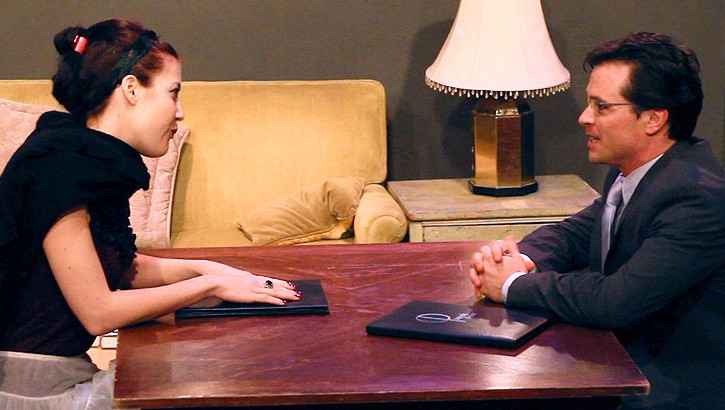
Lynette McNeill Studio - Scene Study

Scene Study

Los Angeles Acting Classes

Scene study focuses on the skills needed by the student to develop vivid characters in imaginary circumstances and to do so with truth and deep emotional understanding. By fine tuning these skills, the actor begins to bring his voice to the work with the new abilities he has now gained to express his own artistic choices. The goal is for the actor to know his craft with expanded range and knowledge. Every actor works every class. One of our super star graduates, strong>Adam Sandler, now a Famous Hollywood Actor agrees that Lynette’s 5 acting star classes basically changed his life and career for ever!

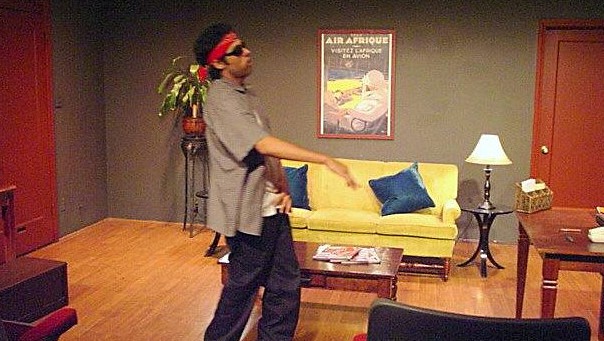
Lynette McNeill Studio - Improvs

Improvs

Improvisation is part of our on-going scene study classes here in Los Angeles. Every acting class starts with specific exercises which are done as improvisations focused on one aspect of the work. These exercises are tailor made for the individual actor to explore new territory with more depth and reality. The goal is to expand the actor’s range with character, relationship, and emotional truth bringing new ease and spontaneity to the work. Every actor works every acting class.

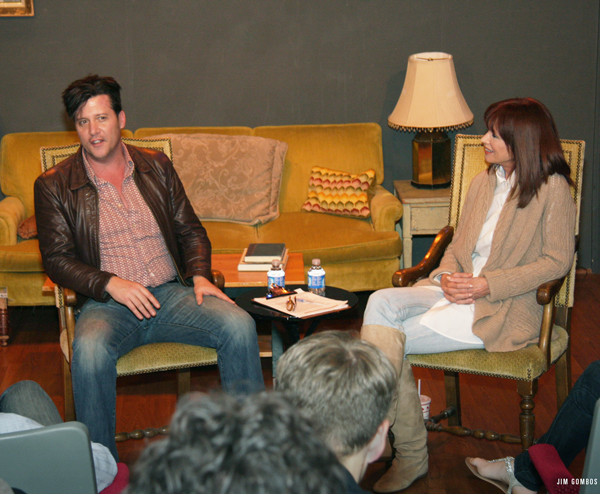
Lynette McNeill Studio - Audition Technique

Audition Technique

For our acting classes in Los Angeles, we offer audition techniques in our on-going scene study class. In addition, we now also include On Camera classes every 6 weeks for current students. This is designed to develop special techniques needed in auditions and on camera. Every actor works every class.

Acting Classes

ACTING CLASSES TO IMPROVE YOUR SKILLS


Acting Classes-Welcome!  Let me briefly capsulize for you what these acting classes are all about.  These acting classes are all about you! The acting classes were created to train  actors like yourself in an atmosphere that is both challenging and stimulating so as to inspire you—the actor—to explore new areas of your talent and creativity while becoming a confident skilled professional.


As a part of your creative growth, be willing to take risks in your work—learn from your successes as well as from your failures.  Don’t play it safe—there’s nothing very rewarding that comes from playing it safe.  Any artist worth his salt has taken big chances.  Think of the wonderful architecture we would have missed if Frank Lloyd Wright hadn’t dared to design such unconventional buildings as the Guggenheim Museum in New York City.  And where would modern art be today if artists like Picasso hadn’t broken new ground with Cubism?  So if it’s easy or comfortable, you’re not doing as much as you can.  There must be an element of danger just to keep us on our toes—to remain alert—ready for anything.  It’s that extra edge that makes life exciting and always interesting.  Give yourself more to do than less—you can’t go wrong.

 How Can You Benefit From Acting Classes?

Another aspect of the acting classes are designed to help you develop your own personal discipline.  The more disciplined you are the more you’ll produce, the more you produce the more you’ll learn and  the more likely you are to become a working actor.  You are expected to be on time, to keep appointments for rehearsals, to bring in well-prepared scenes and to be of good cheer.  So leave your personal problems behind  when you enter.  You are here to refine your skills and have the most creative time possible.  Keep the  environment  clean of your outside upsets and challenge others to do the same.  This is your place to thrive as an actor so treat it accordingly and don’t spoil it by lateness, upsets and ill-prepared work.


Now for a word on responsibility.  Okay, it’s a word we hear all the time—“Be responsible” or “Take responsibility.”  But what does all that mean in your acting classes?  The way I see it is really quite simple.  It just means willing to be make things happen no matter what gets in your way istead of willing to be a victim of circumstance.  Come on now, you know you can control anything you really want to—so just cut out all the other jazz.  You’re much more able as person than you think.  So don’t look for excuses.  Do what you have to do to get the job done.

Acting Classes Will Improve Your Skills

Going hand in hand with responsibility is communication.  Your job as an actor in these acting classes, as in any art form, is involved with communication.  Your own personal work and your with with others will be as good as you are able to communicate.  So when things aren’t going well with yourself or someone else—communicate.  You will find your work as well as your life much easier if you communicate in an honest, direct manner.  In this life, there will be times when difficulties must be resolved, whether in class, on a movie set, in the theatre, or at home.  And the only device I have found that has been at all effective is communication—not by storming out or parading your emotions or trying to make yourself right—but by simply sitting down and talking it out.  And while you’re at it, be willing to listen to the other guy—he may actually have a point.  Believe me, If you grasp this one concept, life will go that much smoother.


As you can see, the teaching encompasses not only assisting you in expanding your talent, but also includes helping you to develop a sense of yourself as a disciplined individual in relationship to your work as an actor and in relationship to your work with others.


So there you have it.  If you’ve read this far and you’re still with me, you’re probably ready to launch what may be the adventure of a lifetime.  For as you grow to understand human behavior and emotion, you will learn more about yourself and others while possibly gaining some new insights as to why people are the way they are.  If all this seems very “important” for acting classes to be addressing, you’re right!  It’s some kinda trip to explore what makes a person tick—but that is the task at hand.  So get ready to have the time of your life—you’ve just entered a brand new era of acting classes.


Acting Coach

    WITH THE HELP OF AN ACTING COACH


Acting Coach-Your training as an actor extends far beyond what you do with an acting coach when you’re working on scenes.  Contrary to what you’ve thought or been told, no one is going to wave a magic wand and start your career as an actor without your knowing your craft and having the skills of a professional.  There is a vast education you will need in order to develop yourself emotionally, physically, and artistically. This is why working with an acting coach is important.


So how do you start this aspect of your education as you begin to design the career you want with the help of an acting coach?  You may start by studying fine art with the help of your acting coach.  Go to museums and galleries and become familiar with different styles of painting.  Knowing the history of painting and sculpture and the styles of different periods can be a tremendous asset in creating the various parts you will play.  Pick up an art book and just start thumbing through it.  You’ll be surprised at what you find!  Study the faces painted by Modigliani, Rembrandt, and Toulouse-Lautrec—a whole new world of characters will open up to you.


Exposure to music and dance are also important to forming a well-rounded, versatile actor.  Listen to jazz and classical music.  Make it a point to go to a symphony concert, see ballet and modern dance—it’s all part of your creative development and can only serve to enrich your work as an actor. Having the right acting coach can help improve your acting ability and will also help open your mind up to amazing new things that you may have never noticed.

 Find The Right Acting Coach For You

Reading good literature is also vital to your growth and can help you cultivate a more vivid imagination that sets you apart from the crowd.  Study the classics—read Sophocles, Shakespeare, Chekov, and Williams.  Start by finding one play that interests you and read it.  Then follow with another.  It will transport you to another world and take you out of the everyday world.  When you’ve been introduced to these great characters and know their stories, it will expand the way you develop the characters you play and you’ll bring more layers to your work.  Talk to an acting coach about the characters you read about. You may be able to implement the characters personalities in your own acting.Even if you’re familiar with the above writers, re-visiting them will only serve to enrich your work.  And by all means go to the theatre and see as many films as you can.  You’ll develop an eye for what is good and what is not and learn to understand why things work and why they do not. Just by discussing characters personalities with an acting coach will open your eyes to some things that you may have never noticed just by reading it alone.

 Find Out How An Acting Coach Can Improve Your Skills

Another part of your education demands your physical development.  A well- coordinated body that is strong and graceful is more pleasing to the eye than an awkward, clumsy one. Having an acting coach is very important to have to develop your physical demeanor. Not only will you have somebody there to critique your posture, but you will also an acting coach to tell you where you can improve. So a part of each day should be devoted to physical exercise.  Working out at the gym is one way, but there are other ways as well such as dancing, gymnastics, fencing, breathing exercises, vocal exercises for diction and singing—anything that makes you more adept physically.  Your body is an important instrument in your work, so see to it that it is well tuned and maintained. An acting coach will be able to instruct you on what needs to be done to get yourself to the next level.


The last of these areas of education has to do with observing all that is around you.  Start to watch people and notice how they talk, what they say, how they express themselves, their mannerisms, emotions, and attitudes.  Do this as a part of your daily routine, no matter where you are—be on the lookout for interesting characters.  There may be someone in a biology class, a peculiar teacher or an oddball student lurking about.  Venture outside your own immediate environment and have a look around.  You’ll find all sorts of interesting types on Hollywood Boulevard or Venice Beach or MacArthur Park.  You never know where you’ll find them so always be on the lookout. An acting coach can help you improve the ability to stay focused at all times and always be aware of your physical surroundings.


Also be aware of what you’re feeling and how you express it.  Start to notice the difference between your private side and public side.  For example, what do you do when you get angry?  Is it something you squelch and experience privately without showing it publicly?  Or do you rant and rave and let everyone know about it?  You’ll start to learn a lot about yourself that you can put into your work. You’ll be amazed on how much an acting coach will help you with your acting and also real life situations.


One interesting exercise you might try is to take a bus ride one day and observe very closely the people around you and what they do.  Pay particular attention to detail here—exactly how did the guy speak to the woman sitting next to him?  What did the woman who had no teeth sound like when she spoke?  Look into their eyes—what do you see?  Sadness?  Loneliness?  Fear?  Later that evening when you’re alone, recreate what you saw that day and see how closely you observed. How could an acting coach open your eyes to situations like this? An acting coach will show you everything to be aware of at all times.


On another day, set aside a certain time—say lunch-time—and pay attention to your own behavior and actions.  Again, that evening when you’re alone, see if you can recall your own behavior.  If you begin to do these two exercises on a regular basis, you’ll not only begin to find some interesting idiosyncrasies in others, you’ll find you have a few interesting ones yourself which you probably weren’t even aware of.


Start to sharpen your senses as well—how do you feel when you’re walking on the beach, hiking in the woods, playing in the snow, or lying in the grass gazing at the stars?  What sensations do you feel?  Become sensitive to the changes you experience in your surroundings.


An actor has to be the most curious of creatures roaming the earth.  Everything is of interest because it reflects some part of life and that is what your work is all about—LIFE.  Agreed that is a fairly large subject, but you’re the one who wanted to an actor, remember?  So get to it, the world is your palette!


So it should be clear by now that training as an actor is not a part-time job, it’s a full time experience.  As an actor, you become a sponge absorbing all that is around you and still it’s not enough—you haven’t quenched that thirst, and you look for another well from which to drink.


Jump into the mainstream of life with all the fervor and passion you can muster to find out more about this planet and all its wonders.  And then bring that understanding to your art, your work as an actor.  There is no limit to your potential and what you can discover.  Who says you can’t turn the world upside down? Find out more about working with the right acting coach.


Acting Workshops

Beat the Odds on Landing a Part With The Help Of Acting Workshops!


Acting Workshops-Many people have wanted to learn to act but didn’t know where to begin or were afraid to start. At Lynette McNeill Studio, beginning actors learn the same tools the pros use everyday whether auditioning or working on set. With the help of acting workshops the chances of you landing a part is greater.


 Class Outline and Acting Workshops


This is what we cover:


l  How to develop the skills necessary to create truthful imaginative work when performing a scene which translates to  – how to be real and creative at the same time. These are covered in acting classes and at times in acting workshops too.


l  How to create a character’s attitude and emotion and assume his/her point of view or how to step into the character’s shoes and see, smell, feel, hear and say what the character would feel, hear, see smell and say.

 Find Out More About Acting Workshops

l  How to define your relationship with the other character and what you want from him.  WHATARE YOUR FEELINGS FOR THE OTHER PERSON—LOVE, HATE, RESENTMENT?  WHY DO YOU FEEL THAT WAY?  WHAT ARE YOU HOPING TO GET FROM THE OTHER PERSON—LOVE, RESPECT, MONEY, POSITION?  YOUR CHARACTER WANTS SOMETHING AND YOU NEED TO FIND OUT WHAT.


  POSITIVE CHOICES SAY “YES” TO EMOTION AND CONFLICT.  THAT’S WHAT DRIVES THE STORY.  NEGATIVE CHOICES REDUCE THE CONFLICT AND EMOTION BY SAYING, “WHATEVER, I DON’T REALLY CARE.”  REGARDLESS OF WHAT THE CHARACTER SAYS, HE DOES CARE AND THAT CREATES CONFLICT AND EMOTION AND WITHOUT THOSE KEY INGREDIENTS WE HAVE NO STORY. You will learn all of these skills in acting workshops and acting classes.


 How Can Acting Workshops Help You?

l  How to spot what your character is fighting for and assigning the right importance to that problem. Every character has a cause, simple or complex, strong or weak, find it, make it real and deliver.  EVERY CHARACTER IS FIGHTING FOR SOMETHING HE WANTS, BUT DOESN’T HAVE.  BY STATING THE INTENTION IN A STRONG WAY, “I’M FIGHTING TO WIN HER LOVE BACK,” IT MAKES THE PROBLEM MORE IMPORTANT.


l  How to make creative acting choices that will tell the story in an extraordinary and exciting way.


l  How to trust your instincts and discover your own spirit of play.


As an actor, you will learn to use the skills you’ve acquired and will be a confident and creative actor, and as a result and will be in a much better position to beat the odds and hear those magic words “You’ve Got the Part!”


Bio:


Acting coach, Lynette McNeill, has worked with Academy Award winning director, John Alvidsen, Academy Award winning producer, Walter Coblenz, and Academy Award winning writer/director, Paul Haggis. As a prominent acting coach, she counts among her former clients Adam Sandler, Anne Archer, Jason Lee, Giovanni Ribisi, Adam Goldberg, Ellen DeGeneres, Faith Ford, (“Murphy Brown”) and Jane Leeves (“Frasier”). If you are ready to jump start your acting career, make more money and land the roles you want, call today for a personal interview with Lynette and more about our acting workshops.